
 E-Paper






Namita Bhandare writes on gender and other social issues and has 35-plus years of experience in journalism. She has edited books and features in a documentary on sexual violence. She tweets as @namitabhandare
The return of the boss who cannot be touched
Striding into the Nvidia headquarters in Santa Clara like a conquering Roman emperor, the 63-year-old’s return was loud, by design
Published on: Nov 29, 2026, 06:15:11 IST


Share via
Copy link
Please look to the Nvidia Board to learn the art of executing a 180-degree turn. Eleven days after telling investors it was not considering the return of disgraced founder Jensen Huang, he was back.
Striding into the Nvidia headquarters in Santa Clara like a conquering Roman emperor, the 63-year-old’s return was loud, by design. Employees chanted his name and one woman embraced him in a hug — presumably the optics of which showed a man more bear-huggable brother than creepy predator.
It was an affair with a customer, reportedly a spy for China, that cost Huang his job. It’s hard to survive rumours of bypassing a US government ban on the sale of advanced chips to China, and Huang had no choice but to put in his papers after a banal, boilerplate apology to his family and company.
Five short days later, Huang said he’d be “honoured” to return. Stock prices were falling and Huang’s tech bros-in-arms from Elon Musk to Sam Altman rallied behind him. US President Donald Trump, a man ordered by a court to pay civil damages for sexual assault, said there was no national security breach and subsequently hinted at a presidential pardon, if it came to that.
Huang returned, stock prices surged, and Trump’s portfolio reportedly grew fatter by $14 million. Huang promised to be better, said he’d stop bullying employees and confided he was undergoing 90 minutes of daily therapy.
It was like watching the real-life sequel to Gordon Gekko’s famous Wall Street speech: Greed is good.
Huang is still being investigated by various government departments and, for what it’s worth, his own Board. Stock prices have fallen since that first bump, raising questions about the company’s long-term prospects.
But lost in that noise are Huang’s multiple relationships within the company with employees who report to him. He is said to have told his Board of other affairs, number unknown. Regardless of two or 22, they reveal not just a moral lapse, but a man with reckless disregard for conflicts of interest, serious lapses in judgment, possible misuse of his position, and flouting his company’s code of conduct, which requires employees to disclose personal relationships with each other.
In a post #MeToo era you’d assume affairs between bosses and subordinates were a no-go area. At its core is an understanding of power dynamics between a powerful boss and a subordinate employee. If your boss holds your career in his hands, do you really have the freedom to say no?
Two weeks ago when Huang quit, it was reassuring that the rules applied even to a superstar founder. How off-the-mark. Women employees of Nvidia and corporate America now know they count for so little when a powerful, predatory boss is to be protected at all costs. Huang warned other employees, without a trace of irony, in his first open meeting after his return: The code of conduct was not to be violated. “Sometimes, it’s appropriate to forgive,” he said. “Sometimes it’s not.”
Who decides? #MeToo was about setting up institutional safeguards and lines that could not be crossed by anyone. Those lines are now exposed, and years of work building workplaces where women felt safe could unravel.
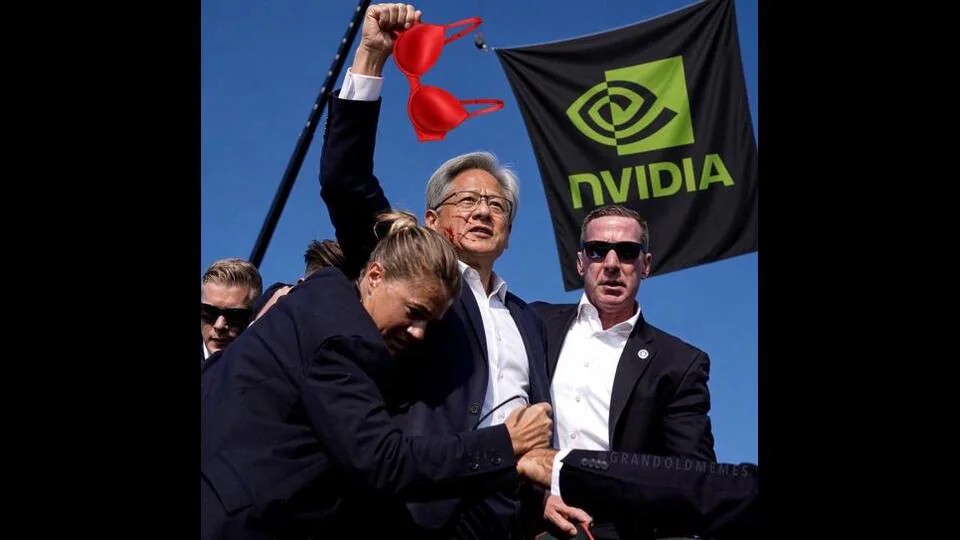
On Truth Social, Trump posted a doctored image of himself moments after he survived an assassination attempt in 2024, surrounded by secret service agents, his fist in the air. In the doctored image, instead of Trump, it is Huang, an Nvidia flag behind him, holding aloft a red bra. The misogyny and symbolism was unmissable. If you are powerful enough, it’s open season. The President says so.
Namita Bhandare writes on gender. The views expressed are personal
ABOUT THE AUTHOR

Get Current Updates on India News, Elections 2024, Lok sabha election 2024 voting live , Karnataka election 2024 live in Bengaluru , Election 2024 Date along with Latest News and Top Headlines from India and around the world.











