
 E-Paper






Rahul Singh is Defence Editor at Hindustan Times and has covered military affairs and national security for nearly 25 years. Apart from extensive and deep reporting on the Indian military, including several newsbreaks that have set the national news agenda over the years, Rahul has reported from conflict zones including Jammu & Kashmir, India’s North-east and the Democratic Republic of Congo. Rahul has co-authored the bestselling 'India's Most Fearless' series of books on recent Indian military operations. Widely read and translated into multiple languages, the books place an emphasis on firsthand accounts of daring missions across the three services. His work has been adapted into web series and films including the National Award-winning Amaran. Rahul comes from an Army background and attended schools across the country before completing his education from Panjab University, Chandigarh. Grew up playing tennis, now mostly cheers from the sidelines. Works in Delhi, heart in the mountains.
CDS General Subramani flags Pakistan’s space growth with China, Turkey’s help: ‘Must factor it into our calculus’
Subramani's comments come against the backdrop of closer military cooperation among Pakistan, China and Turkey, which came into focus during Operation Sindoor.
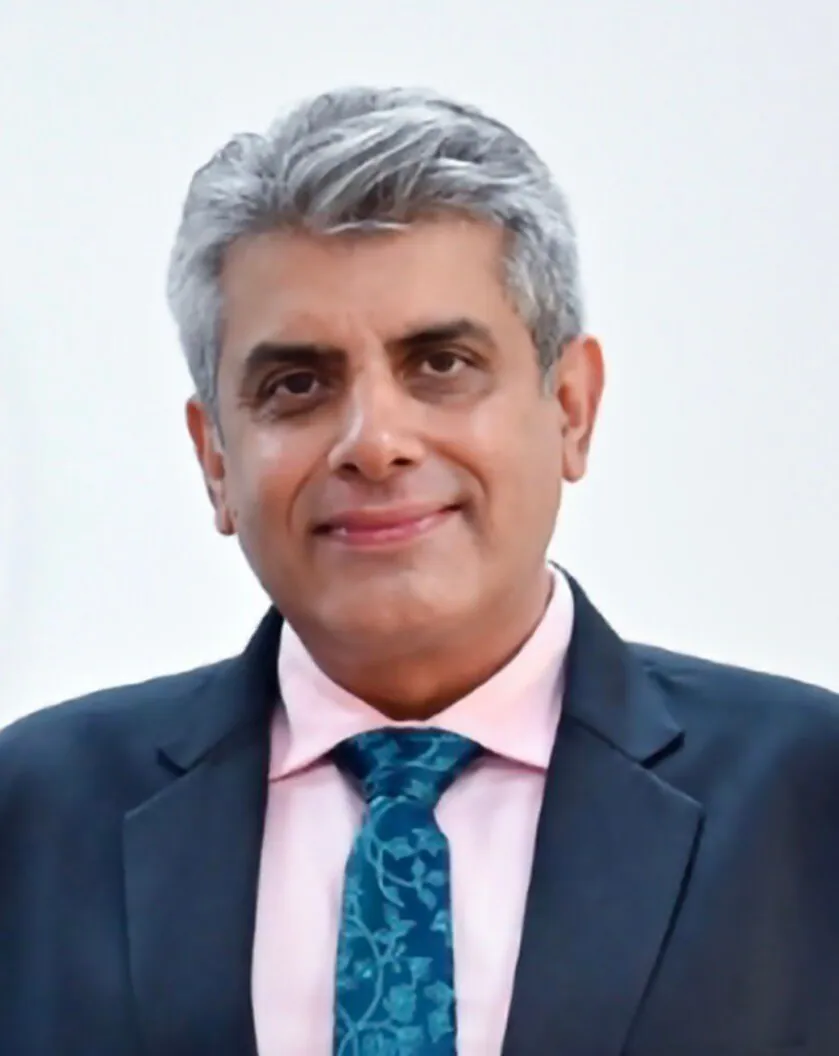

Pakistan's expanding space capabilities, backed by China and Turkey, have added a new dimension to India’s security calculus, Chief of Defence Staff General NS Raja Subramani said on Friday, underscoring the need for the country to strengthen its own space programme.

"Pakistan's space capability is improving with Chinese help. Also, Pakistan's Suparco (Space and Upper Atmosphere Research Commission) is working to develop its own capability. Now we also have to take for granted that it will be aided by the Turkish too," the CDS said in response to a question.
He delivered a talk titled Future of Warfare and India’s Preparedness to Conduct Multi-Domain Operations at the Vivekananda International Foundation.
Also Read | Biggest threat to India lies in 'cognitive domain', says former CDS Gen Anil Chauhan
'Their ISR and other capabilities will be better'
Subramani's comments come against the backdrop of closer military cooperation among Pakistan, China and Turkey, which came into focus during Operation Sindoor last year.
"And whatever capability is available with the Chinese in terms of ISR (intelligence, surveillance, and reconnaissance), positioning, navigation and timing... will be available to the Pakistanis. We will have to factor it into our calculus. Their ISR and other capabilities will be better. We have to look at enhancing our capability,” Subramani said.
Also Read | ‘Million-dollar missile' vs '$3,000 drone’: CDS NS Raja Subramani says 3 shifts shaping modern warfare
The CDS said Phase III of the Space Based Surveillance (SBS) mission will significantly boost Indian capabilities. India plans to launch 52 dedicated military satellites over the next three years under SBS-III, which was approved by the Prime Minister-led Cabinet Committee on Security in October 2024.
Spearheaded by the Defence Space Agency under the HQ Integrated Defence Staff, the ₹26,968-crore project involves ISRO constructing and launching 21 satellites, with private companies handling the remaining 31.
Also Read | Armed forces need a balance of youth, experience: Chief of Defence Staff
To be sure, China is expanding its space capabilities rapidly and can potentially disable or knock out satellites. It is known to possess capabilities to disrupt satellite signals using jammers as well as other anti-satellite technologies.
"SBS-III, when it comes in, will enhance our capability to a great extent. Simultaneously, we are also working on methods to ensure that we are able to build as also launch more satellites. We are working with our private sector entrepreneurs," Subramani added.
China launches Shenzhou 24 spacecraft
The official's remarks came days after Pakistani air force pilot Muhammad Zeeshan Ali became the first foreign astronaut to blast off China's Shenzhou-24 spacecraft to the Tiangong space station. “The friendship between China and Pakistan is as vast as outer space," Ali had told reporters, according to a Bloomberg report. China on Wednesday launched the Shenzhou 24 spacecraft with three astronauts, two Chinese and a Pakistani.
Pakistani astronaut Muhammad Zeeshan Ali, 40, flew alongside Chinese astronauts after the craft blasted off from the Jiuquan Satellite Launch Center in northwestern China. Pakistani President Asif Ali Zardari and Chinese President Xi Jinping exchanged letters congratulating each other, AP reported, citing a statement from Zardari's office.











