

Sign in

Paws for effect: A Wknd slideshow of famous canines on canvas

Updated on: Nov 21, 2026, 16:01:59 IST

As Prefered on
Share via
  • facebook
  • twitter
  • linkedin
Copy link
  • copy link
In Mughal-era India, hunting dogs were prized members of the king’s entourage. As such, they appear frequently in miniature paintings. Above, a portrait of Bhim Singh of Mewar (1799; a region in present-day Rajasthan) on such a hunt. (Metropolitan Museum of Art, New York)

Few animals enrich a frame quite like a dog can. For thousands of years, we have been painting and carving them into canvas and stone. Take a look.

The Victorian-era art critic John Ruskin argued that artists of 16th-century Renaissance Venice such as Titian, Veronese and Tintoretto painted dogs “to give the fullest contrast to the highest tones of human thought and feeling”. They were the “connecting link between man and animals,” he said.

This idea recurs in art. Click here for our Wknd special on what canines bring to a canvas. And scroll for some of our favourites that didn’t make that initial list.

.
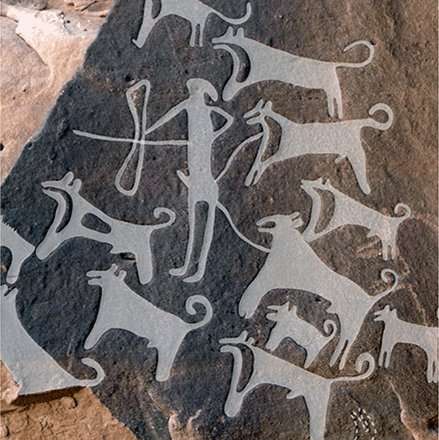
Early petroglyphs in the Saudi Arabian desert, dating to about 7,000 BCE, show humans hunting with dogs. (Wikimedia)

.

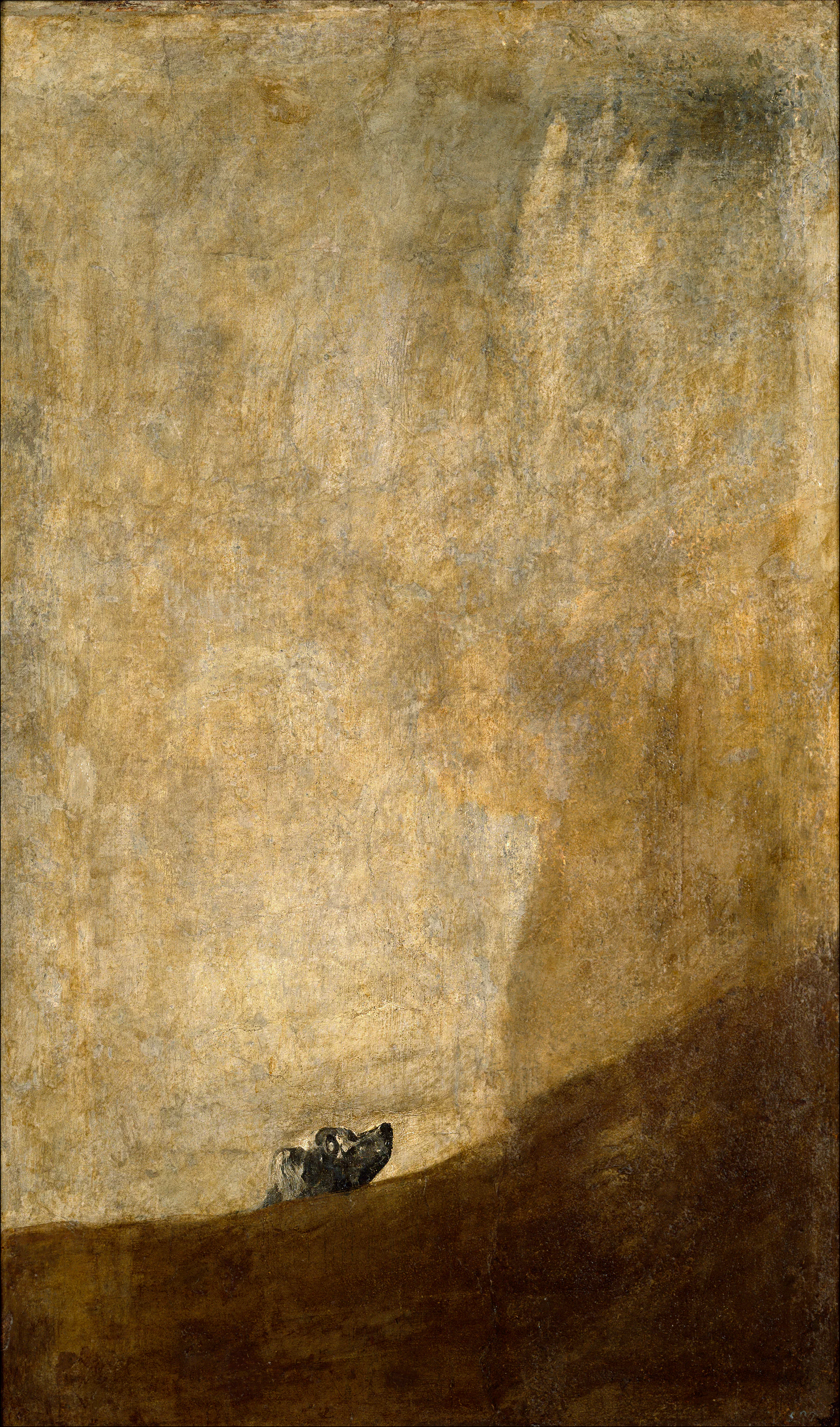
The Dog by Spanish artist Francisco Goya, now at the Museo del Prado in Madrid, shows the head of a dog looking upwards, in an otherwise bleak canvas. The dog is in distress, perhaps drowning.This was one of Goya’s Black Paintings, create directly on a wall of his home, sometime between 1819 and 1823. He was in his mid-70s at the time, living alone and battling acute physical and mental distress. He died in 1828. (Wikimedia)

.

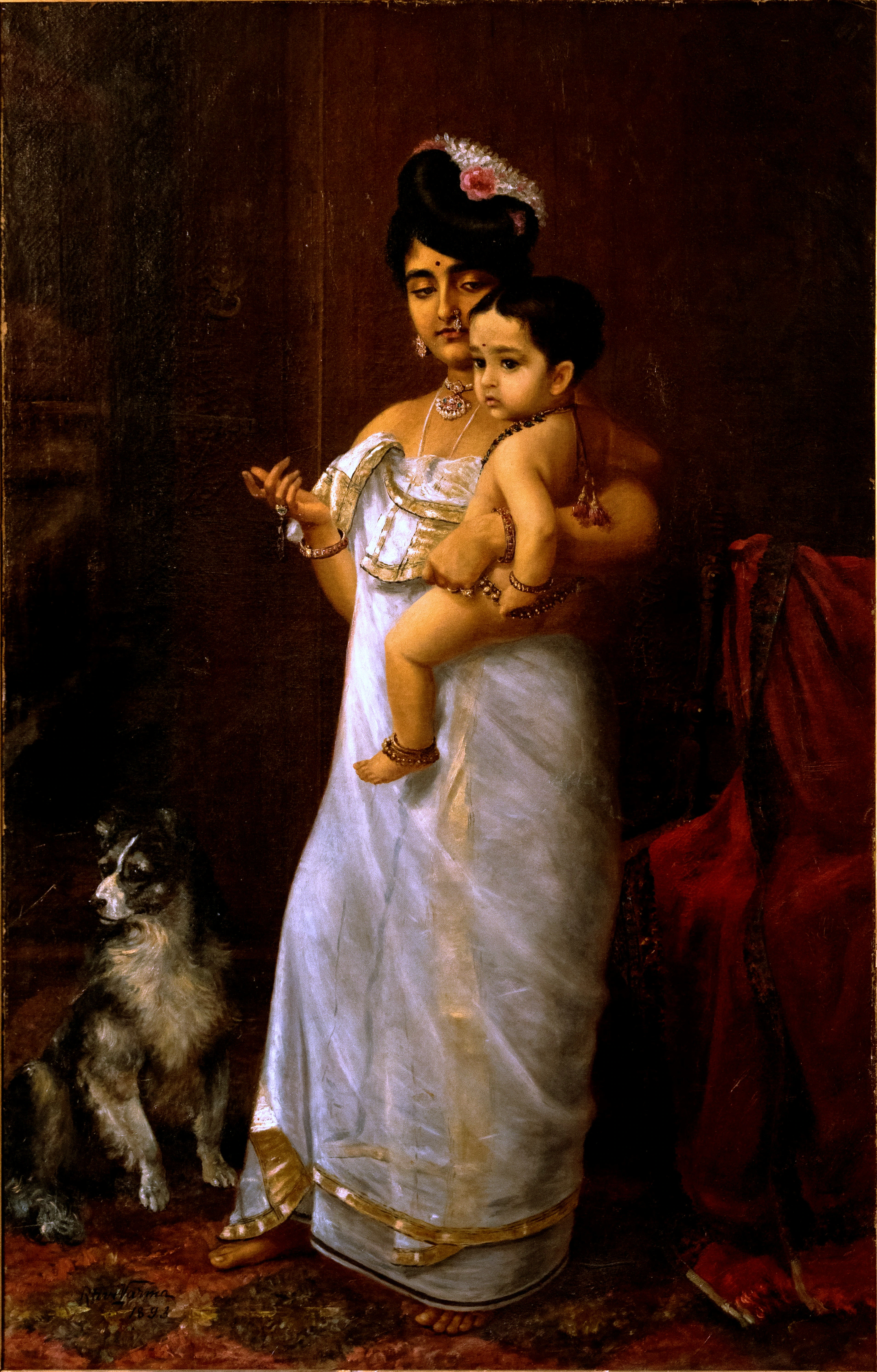
There Comes Papa (1893) by Raja Ravi Varma is thought to mark an early stage of the transition from the matrilineal joint family to the Victorian-era nuclear-family ideal, in Kerala. The pure-bred European dogs symbolise wealth and status. And the woman is, unusually, alone. (Wikimedia)

.

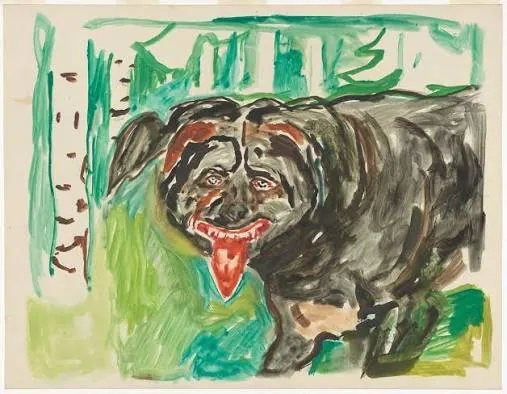
Edvard Munch had several beloved dogs of his own and painted them often, but this portrait isn’t of one of them. Angry Dog (1938-43) is a painting of a canine named Rolle who lived down the road from Munch’s home in Oslo. He and the boy who delivered the milk were both bitten in the leg by this “utterly dangerous” animal, the artist noted in his diaries. (Munchmuseet, Oslo)

.

In Gustave Courbet’s 1855 masterpiece, The Painter’s Studio, dogs appear to be accompanying a poacher, a seated man identified by his rifle and hunting boots. Art historians say he was likely a disguised caricature of the French emperor Napoleon III. Courbet, a staunch republican, depicted the emperor as an outlaw hunter with dogs as a way to subtly mock his illegitimate seizure of power, and his storming of the cultural landscape of France. (Wikimedia)

.

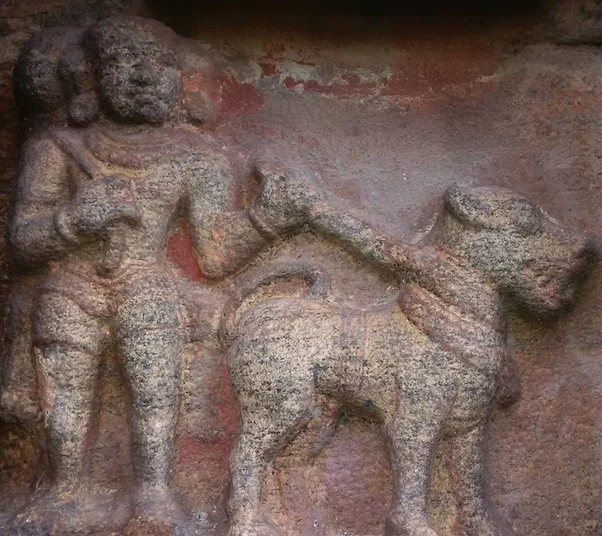
A sculptural representation of the Alangu mastiff at the Airavateswara temple in present-day Tamil Nadu. The temple was built in the 12th century, during the reign of the Cholas. (Wikimedia)

ABOUT THE AUTHOR

Gowri S is a principal correspondent with HT’s Sunday longform features section, HT Wknd. With eight years of experience in feature journalism, she covers culture, the arts, environment, climate crisis, technology and history with a focus on India and the world. On an off day, find her nose-deep in a new playlist, or between deadlift sets.

Explore the latest Lifestyle News on health, fashion, travel, relationships, food and festivals. Find useful tips, expert advice, trends and inspiring stories for everyday living.