
 E-Paper






Follow the latest breaking news, major developments and agenda-setting stories from India and around the world with the newsdesk at Hindustan Times. Operating round the clock, the desk brings together experienced editors, reporters and correspondents to deliver fast, accurate and contextual reporting across subjects that influence public policy, governance, business, society and international affairs. The HT News Desk covers politics, elections, government policies, the economy, business and markets, science and technology, the environment, law and order, infrastructure, education, climate issues and geopolitics, while closely tracking developments across states, institutions and global capitals. The team also leads coverage of major breaking news events, policy announcements, court proceedings, natural disasters, public emergencies and significant international developments. Reports published by the newsdesk are based on information gathered from reporters on the ground, official statements, government agencies, court records, regulatory filings, recognised institutions and other authoritative sources. Stories undergo editorial scrutiny and verification processes to ensure accuracy, fairness and relevance, and are updated as events evolve and additional information becomes available. Whether covering a key political decision in New Delhi, an economic policy shift affecting millions, a landmark court ruling or a major global event, the HT News Desk aims to provide readers with reliable, fact-based journalism that delivers not only the latest developments but also the context and analysis needed to understand their wider implications.
Centre’s delimitation plan: States’ proportionate Lok Sabha share to be frozen until 2051
The Delimitation (Second) Bill, 2026, proposes a 50 per cent increase in the number of Lok Sabha seats allocated to every state and Union territory (UT).


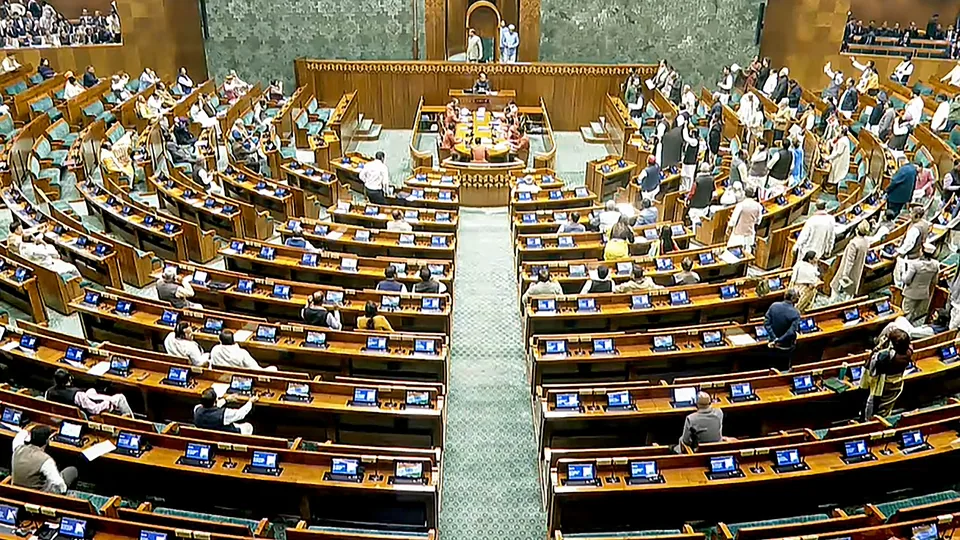
The Lok Sabha seat share for all states will increase by 50 per cent, and the proportionate allocation will be frozen for 25 years -- till 2051, according to a copy of the Bill set to be tabled in Parliament during a special sitting starting November 30.
Follow live updates on the delimitation bill here.
The Constitution (One Hundred and Thirty-Second Amendment) Bill, 2026, cites Article 81 of the Constitution and states, "(a) in clause (1),–– (i) in sub-clause (a), for the words “five hundred and thirty”, the words “eight hundred and fifteen” shall be substituted; (ii) in sub-clause (b), for the word “twenty”, the word “thirty-five” shall be substituted."
"(b) in clause (3), in the proviso,–– (i) for the words and figures "until the relevant figures for the first census taken after the year 2026 have been published", the words and figures "until the year 2051" shall be substituted; (ii) in item (ii), for the figures and word "2001 census", the words, brackets and figures "latest published census figures available on the date of the commencement of the Constitution (One Hundred and Thirty-second Amendment) Act, 2026" shall be substituted," it added.
Also Read | Govt's delimitation plan: 50% seat hike for every state, Lok Sabha strength ceiling rises to 850
50% seat hike, Lok Sabha strength ceiling
The Delimitation (Second) Bill, 2026, proposes a 50 per cent increase in the number of Lok Sabha seats allocated to every state and Union territory (UT) to facilitate the implementation of women's reservation in Parliament and state and UT legislative assemblies. If enacted, the Centre will constitute a delimitation commission to carry out the exercise.
According to the Bill, accessed by HT, the delimitation exercise will be carried out on the basis of the last published census.
Furthermore, after the delimitation, the number of seats in Lok Sabha seats will increase up to 850, 815 will be from states and 35 from UTs.
Also Read | How Centre's delimitation plan could change India's electoral map: A look at state-wise numbers
Union Cabinet approves Constitution amendment bill
The Union Cabinet on Friday approved the Constitution 132nd Amendment Bill. The meeting, chaired by Prime Minister Narendra Modi, came a day after the Lok Sabha Secretariat announced a four-day Parliament sitting, scheduled to begin on November 30 and conclude on December 3, subject to exigencies.
Deep Dive











