
 E-Paper




When the festival of lights leaves us gasping for air
Delhi’s post-Diwali pollution highlights the unequal burden of harmful celebrations.




Somewhere in the world, people voluntarily step inside an art installation to experience what millions of us in Delhi have learnt to live with. British artist Michael Pinsky’s ‘Pollution Pods’, an internationally exhibited installation, recreates the atmospheric conditions of different parts of the world through a series of interconnected domes. From the pristine air of Tautra in Norway to simulations of polluted urban environments in London, Beijing, São Paulo and New Delhi, the installation offers a powerful sensory reminder of the consequences of environmental neglect.
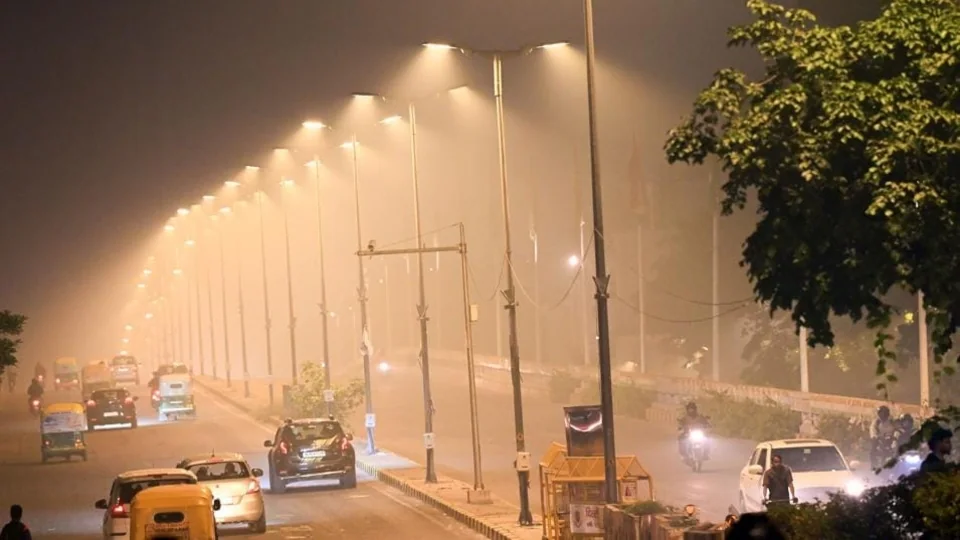
What is particularly unsettling is the contrast it presents. For visitors, experiencing Delhi’s simulated air is an exercise in environmental awareness. For millions of us, breathing the real thing is an everyday reality.
And every Diwali, we knowingly add to that burden.
Growing up, Diwali in our household was never simply about fireworks. The morning began with my mother decorating our entrance with fresh flower garlands, while my sister Radhika and I sat beside her, creating rangoli. There was warmth, anticipation and a quiet sense of belonging in these familiar rituals.
Those traditions remain unchanged. What has changed is the morning after. Having spent the past few Diwalis in Toronto, returning home this year was particularly special. Yet, the following morning, Gurugram’s air quality was firmly in the ‘very poor’ category. Instead of simply enjoying the lingering warmth of the festivities, I found myself handing N95 masks to my father and brother before they stepped outdoors. Even our family dog seemed distressed in the aftermath of the celebrations.
Those of us who can afford protective masks, air purifiers and comfortable indoor spaces have some means of shielding ourselves. Street vendors, sanitation workers, people experiencing homelessness and animals have little choice but to endure the conditions we collectively create.
This is not an argument against Diwali, nor is it a demand for an outright ban on fireworks. It is an invitation to reflect on whether the way we celebrate continues to embody the values that make the festival meaningful. Through my association with my father's company Progressive Auto Serve Private Limited, which operates an electric bus depot in Delhi, I have witnessed the transformation taking place in the capital’s public transport ecosystem.
The transition towards electric mobility, supported by government policy and investment, is no longer a distant aspiration. Delhi’s electric bus fleet has grown to more than 5,300 vehicles. The changes are visible on our roads and tangible even within bus depots, where the familiar smell of diesel exhaust is gradually disappearing.
It is a reminder that meaningful environmental progress is possible when policy, technology and collective responsibility come together.
If a city can rethink the way it moves, surely it can also rethink the way it celebrates.
Mumbai offers an encouraging example. According to measurements by the Awaaz Foundation, peak noise levels during Diwali declined from 117.8 decibels in 2017 to 105.5 decibels in 2020. Although the latter was an exceptional pandemic year, the decline also reflected the potential of public awareness, regulation and changing social behaviour.
The significance of the festival was not diminished by a quieter celebration.
On November 8 this year, Delhi recorded an Air Quality Index (AQI) of 376, making it the capital’s most polluted Diwali in five years.
The long-term consequences are even more sobering. According to the University of Chicago’s 2025 Air Quality Life Index, sustained exposure to fine particulate pollution could reduce the average life expectancy of Delhi’s residents by 8.2 years compared with living within the World Health Organization’s recommended air quality guideline.
Of course, Diwali is not solely responsible for Delhi’s pollution crisis. Vehicular emissions, industrial activity, construction dust, agricultural residue burning and unfavourable meteorological conditions all contribute to the deterioration of air quality.
Addressing these challenges requires sustained government action, regional cooperation and effective enforcement. Individual responsibility cannot substitute for systemic reform. But neither should the need for systemic reform become an excuse for individual inaction.
The way we celebrate is one aspect of this larger challenge over which we have direct influence.
Traditions have always evolved with changing times. Choosing fewer fireworks, respecting prescribed timings, organising community celebrations and rediscovering the beauty of diyas, rangoli and shared festivities need not make Diwali any less joyous.
Progress does not require us to abandon our cultural identity. It requires us to carry its essential values forward with greater awareness and responsibility.
At its heart, Diwali celebrates the triumph of light over darkness, knowledge over ignorance and hope over despair. Surely, a festival rooted in such profound values can accommodate a greater sense of compassion for the environment and those with whom we share it.
Every year, we clean and illuminate our homes in preparation for the arrival of Goddess Lakshmi. We take pride in making our personal spaces welcoming, beautiful and pure.
Perhaps it is time we extended that same sentiment beyond our doorsteps.
After all, the city is our home too.
(The views expressed are personal)
This article is authored by Devyani Yadav, columnist on sustainable development, management and social innovation.











