
 E-Paper






Indu K Murthy is sector head, climate, environment and sustainability at CSTEP. She holds a PhD in ecology and environmental sciences from Pondicherry University, and has completed her Master’s in botany from M S University, Baroda (with specialisation in forestry and environment), and her Bachelor’s in botany from Ethiraj College for Women, Chennai. Prior to joining CSTEP, she worked as a consultant scientist at the Indian Institute of Science, Bengaluru. Her areas of interest include climate change vulnerability, land-based mitigation, and adaptation/resilience building or climate-proofing development. She is an expert with the UNFCCC Roster of Experts for India (for GHG Inventory), and a Steering Committee Member of the International Platform on Adaptation Metrics. She is associate editor, Frontiers in Forests and Global Change and International Journal of Climate Change Strategies and Management, and academic editor on the PLOS ONE Editorial Board. She is also on the governing board of the South Asia Consortium for Interdisciplinary Water Resources Studies (SaciWATERs) and is a technical advisory committee member of Mahila Abhivuddhi Society, Andhra Pradesh (APMAS).
The price of no climate deal: After COP31, what's next for India and the world
The Antalya summit ended without a deal on fossil fuels or new adaptation money. Scientists explain the implications of no deal, and its next move before COP32.


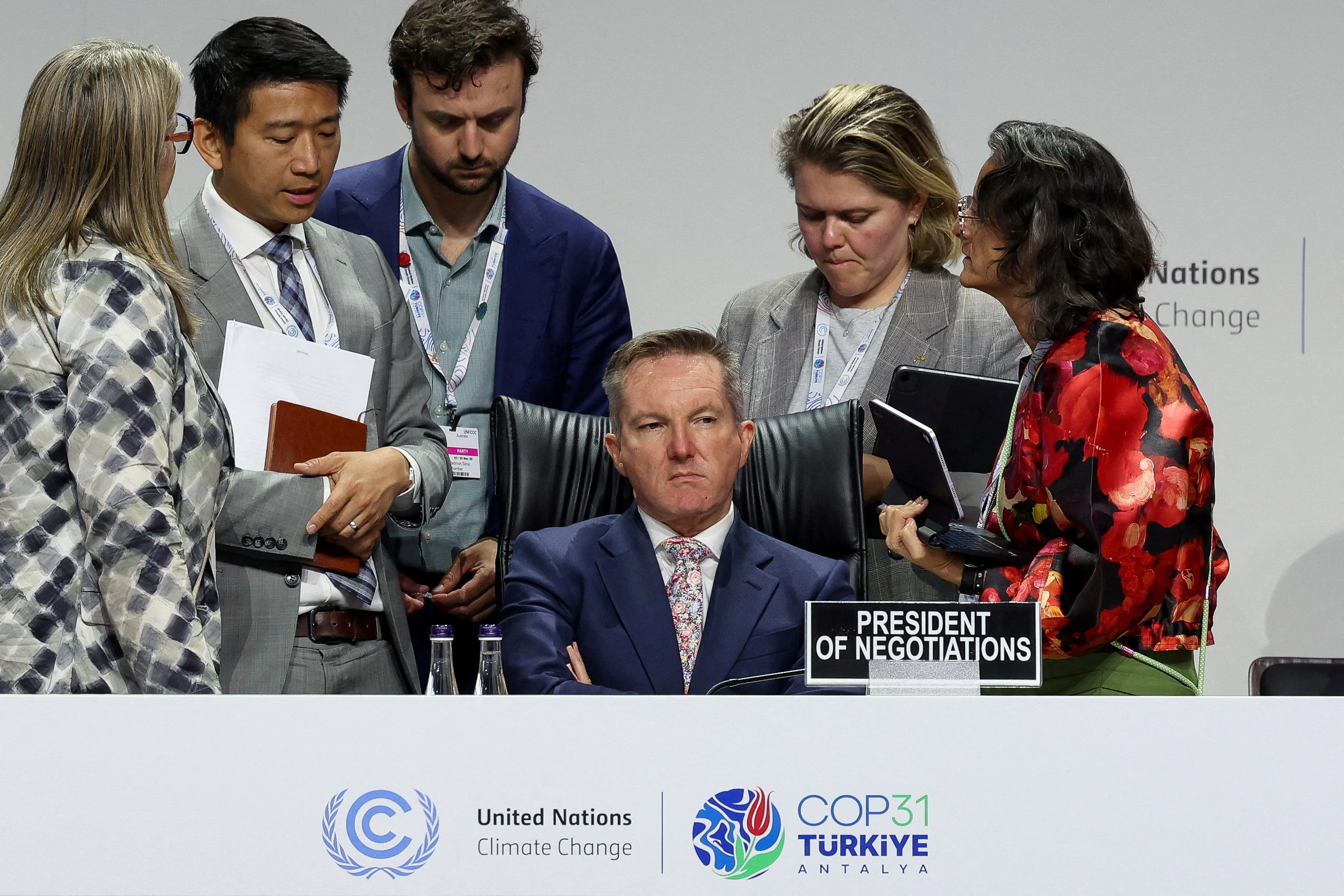
The United Nations (UN) climate summit in Antalya, COP31, ran two days over schedule and ended on November 22 without a cover decision, the overarching text that sums up what a summit achieved. As petrostates like Saudi Arabia and Russia pushed to omit fossil fuels from the final draft, the text was reluctantly accepted by many countries. But with strong opposition from the European Union, Norway, Panama, the Marshall Islands, and other countries, the summit ended without consensus.
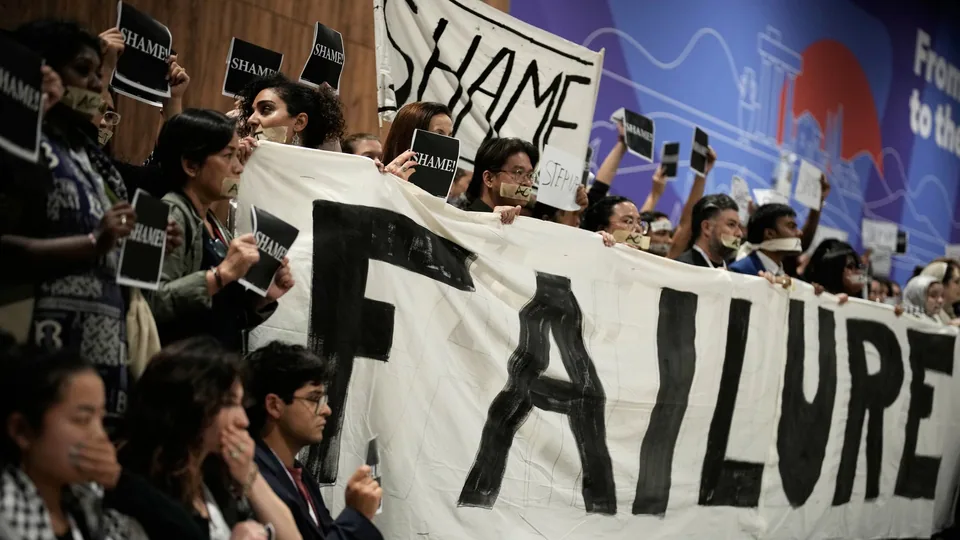
What does a summit with no deal mean?
The Paris Agreement remains untouched, as a cover decision is a summary that sits outside formal negotiations and does not carry any legal obligations. Therefore, technical decisions adopted under individual agenda items in Antalya hold good. So do the major finance commitments of the last two years, including the goal to mobilise $300 billion a year by 2035 from developed countries and the wider ambition of $1.3 trillion a year from all public and private sources. The two-year Work Programme on Climate Finance launched at Belém, covering Article 9.1 of the Paris Agreement, which obliges developed countries to provide finance to developing countries, also continues to hold developed countries accountable for providing finance.
Also read: Why COP31 talks collapsed and what was left undone
Climate finance: No new money
Public adaptation finance rose by just $1 billion between 2023 and 2024, against developing countries’ needs of about $305 billion a year by 2035. Developed countries now leave Antalya with no new public finance commitment on adaptation. The real damage, therefore, is what Antalya failed to add.
An early draft of the Antalya deal proposed at least $120 billion a year for adaptation by 2035, but this figure was dropped in the final draft. A proposed ‘Antalya-to-Addis Ababa Roadmap’ meant to identify predictable public money for adaptation and loss and damage was also dropped. What remained in the final draft was a paragraph recalling Article 9.1 and a line warning that climate measures could become disguised trade barriers.
Developing countries will continue to push their demands through the Finance Work Programme and its Article 9.1 track, now at the mid-year talks in Bonn in June 2027.
Fossil fuels reach a stalemate, yet again
Since Dubai in 2023, when countries agreed to ‘transition away’ from fossil fuels for the first time, no summit has been able to build on that language. Antalya made the split explicit: one camp, led by oil producers, did not accept fossil fuel language, while the other said it would rather walk away than sign a text that ignores it. This resulted in a stalemate under the existing consensus rules for a cover decision.
Two things follow. First, more action will move outside the formal process. One such initiative at Antalya was the ‘35-by-35’ pledge, which aims to raise electricity’s share of global final energy consumption to 35% by 2035. More such coalitions of the willing could become the new normal. Second, as questions about the workings of the UN process grow louder, consultations on reforming the United Nations Framework Convention on Climate Change (UNFCCC) and its decision-making could gain weight. In fact, these talks gained momentum alongside this year’s Antalya negotiations.
Number Theory | Why COP31 failed to deliver on climate action
Addis Ababa will inherit unfinished business
With COP31 failing to reach an agreement, COP32 host Ethiopia will not receive the handover it was promised. The adaptation finance roadmap, meant to be run jointly by the Turkish and Ethiopian presidencies and to conclude at COP32 in Addis Ababa next November, was never formally adopted. Ethiopia will now have to rebuild that mandate from scratch.
COP32 will likely be judged on adaptation finance.
At COP31, the African Group asked for a dedicated negotiating track on tripling adaptation money, with a clear target and timetable, but was turned down. It will press harder on home soil, at COP32. The fossil fuel debate will also carry over, leaving Ethiopia to grapple with a challenge that two presidencies could not resolve.
What it means for India
The implications of a ‘no cover decision’ are mixed. On mitigation, Antalya did not cost India anything, as the absence of new language on phasing out fossil fuels aligns with the country’s position on protecting its energy needs. India also did not sign up for the 35-by-35 target, which it sees as contrary to the Paris Agreement, wherein each country decides its own Nationally Determined Contributions (NDCs), the national climate plans countries submit every five years.
But India’s priorities sank with the cover text. With climate finance as its headline demand, it wanted the final text to explicitly reference Article 9.1 and the trade barriers that the EU’s carbon border tax creates for Indian exporters. The tax, the Carbon Border Adjustment Mechanism, charges importers for the emissions embedded in goods such as steel and aluminium. For a country with vast adaptation needs and given its climate vulnerabilities, a stall on adaptation money is a major setback too.
There is also a reputational cost. While the EU formally rejected the text, one report grouped India alongside Saudi Arabia, Russia, and the African Group. This undercuts India’s claim to lead the Global South on equity and finance. However, coal is still the backbone of India’s grid, and an externally imposed timeline without money or technology puts supply reliability at risk. Further, a just transition for coal workers and coal-dependent states costs money that has not arrived. So, it is only fair that India is against an exclusive focus on coal-dependent developing countries when rich countries are still expanding oil and gas production.
India’s next move must follow from this. It needs to step up its presence in the Finance Work Programme from Bonn onwards. As a highly vulnerable country of the Global South that needs money to invest in technologies and measures to combat climate change, India has good reason to back Africa’s push for a quantified adaptation finance goal. It can also keep opposing a prescriptive fossil fuel phase-out date while making its domestic clean energy expansion the centrepiece of its position.
Also read: Countries return to table at UN's Bonn talks in June 2027
The bottom line
Antalya showed that a cover decision without fossil fuel language could not pass, and one with strong language on it could not either. The Paris rulebook survives, but the system that runs it looks weaker. This matters most to countries that rely on it to ensure the flow of climate finance from rich countries. The gap between agreed financial targets and actual delivery remains a central concern, particularly as adaptation needs continue to grow. The year to Addis Ababa will show whether the money in question can be settled in technical rooms, now that the political route has failed.
Dr Indu K Murthy leads the Climate, Environment and Sustainability sector and Himani Narwal is a senior analyst in the Adaptation and Risk Analysis team at the Center for Study of Science, Technology and Policy (CSTEP), a research-based think-tank. Views expressed are personal.











