
 E-Paper






Gaurav Saigal has over two decades of experience in reporting on public policy, governance, politics, and social issues and extensively covers developments in Uttar Pradesh, including state politics, government policies, infrastructure, the economy, environmental issues, and public administration. He has worked across locations and worked with various media organisations. He has travelled across the state for news reporting. He produces fact-based, balanced, and insightful reports that explain the impact of policy decisions on citizens. He has reported on a wide range of significant stories, from legislative proceedings and elections to development projects, wildlife conservation, and governance reforms. His coverage reflects a strong understanding of regional affairs and a commitment to delivering accurate, timely, and well-researched journalism. His articles regularly provide readers with context and analysis on key issues shaping Uttar Pradesh and the nation. He is consistent in field reporting and in-depth coverage of public affairs. His journalism is characterised by clarity, credibility, and a focus on issues of public interest. His coverage reflects a strong understanding of regional affairs and a commitment to delivering accurate, timely, and well-researched journalism. His content is characterised by an emphasis on factual reporting, official data, and policy analysis, often explaining the impact of government decisions on citizens and institutions.
2027 Uttar Pradesh polls: As Saharanpur becomes first flashpoint, why Congress, Samajwadi Party are vying for it
Will Amethi, Rae Bareli be next as Congress seeks to protect the Gandhi family bastion in Uttar Pradesh?


The Congress-Samajwadi Party (SP) seat-sharing negotiations for the 2027 Uttar Pradesh assembly elections have run into their first political flashpoint in Saharanpur after the SP announced candidates for constituencies that the Congress had already staked a claim to without apparently consulting its partner.
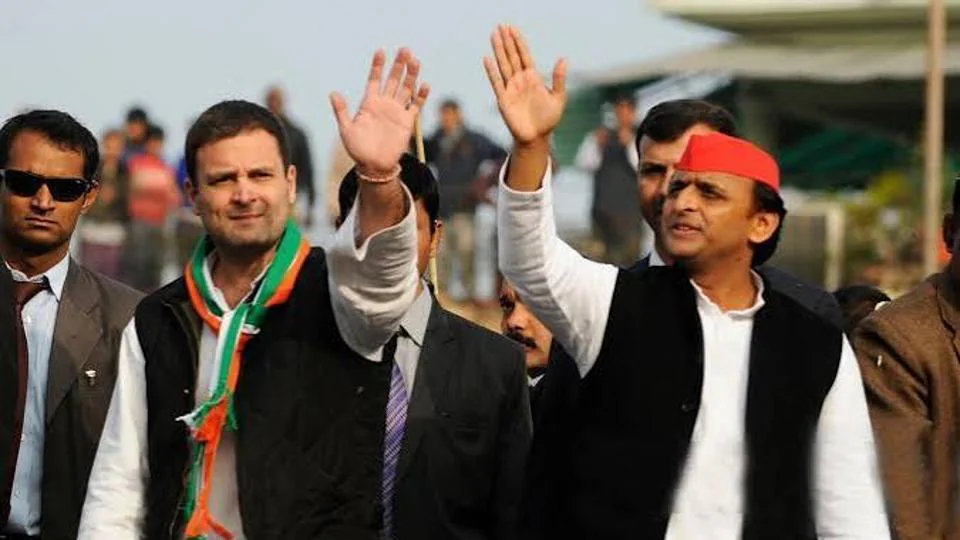
While Saharanpur represents Congress’s attempt to reclaim political space in western UP, Amethi and Rae Bareli present a different but equally important challenge in the seat-sharing negotiations. Amethi and Rae Bareli districts are closely associated with the Gandhi family and remain central to Congress’s political identity in Uttar Pradesh.
The announcement of Umar Ali Khan from Behat and Ashu Malik from Saharanpur, both among five candidates in the SP’s first list, has put the alliance negotiations under strain barely two days after the two parties began discussions. Both constituencies figure in the Congress’s initial list of 181 seats sought for the assembly elections.
Also Read | SP, Congress to hold second round of seat-sharing talks for UP polls tomorrow amid alliance friction
“We are not beggars,” said Imran Masood, Congress MP from Saharanpur, reacting to the SP announcement.
Uttar Pradesh Congress in-charge Rajendra Pal Gautam termed the move “irresponsible,” saying such unilateral announcements could undermine mutual trust, which is essential for the alliance negotiations.
The Imran Masood factor: Congress’s western UP claim
For the Congress, the stakes in Saharanpur extend beyond securing two assembly constituencies. The party sees the district as a starting point for reclaiming its political footprint in western Uttar Pradesh, where its fortunes received a boost with Imran Masood’s victory in the 2024 Lok Sabha elections.
Masood, who is also the UP Congress working president, has emerged as a prominent face of the party’s revival in the region and has been pushing for a larger share of assembly seats in western UP. The Congress has reportedly sought four of the seven assembly constituencies in Saharanpur district, including seats represented by sitting SP MLAs.
The party’s claim rests on a combination of its electoral history, organisational presence and the 2024 Lok Sabha performance. The proposed launch of Rahul Gandhi’s UP campaign from Saharanpur in December has further raised the political significance of the district for the Congress leadership and Masood.
Also Read | Congress to get winnable seats; PDA strategy, ground work key: Akhilesh
Saharanpur: Congress’s past victories versus SP’s present strength
Saharanpur has seven assembly constituencies, where the BJP currently holds five seats and the SP two, while Congress has no MLA.
Behat is represented by SP’s Umar Ali Khan, who won by a margin of 37,880 votes in 2022. In Nakur, the BJP’s Mukesh Chaudhary won by 315 votes. The BJP’s Rajeev Gumber retained Saharanpur Nagar by 7,434 votes, while the SP’s Ashu Malik won Saharanpur by 30,745 votes. In Deoband, the BJP’s Brijesh Singh won by 7,104 votes. The BJP’s DK Nim won the reserved Rampur Maniharan seat by 20,593 votes, while Kirat Singh won Gangoh by 23,449 votes.
In the 2017 assembly elections, the Congress won Behat through Naresh Saini by a margin of 25,586 votes and Saharanpur through Masood Akhtar by 12,324 votes.
Saharanpur’s sizeable Muslim and Dalit electorate adds to its significance in the Congress’s western UP strategy.
The Congress’s seat-sharing demand extends beyond Saharanpur to Meerut, Moradabad, Bareilly and the Agra-Aligarh belt, in western Uttar Pradesh.
The SP, however, has its own electoral compulsions. Its sitting MLAs and established assembly-level networks form a central part of its claim over constituencies where the Congress is seeking space.
Also Read | For Congress-SP, 2024 playbook may hold key to smoothing creases ahead of 2027 battle
The Amethi-Rae Bareli belt
The Congress has two of its six Lok Sabha MPs from the state representing the Amethi-Rae Bareli belt: Rahul Gandhi from Rae Bareli and KL Sharma from Amethi. Their victories in the 2024 Lok Sabha elections have reinforced the party’s claim to political relevance in the region.
However, in Amethi district, the party failed to win any of the four assembly seats in 2022. The SP won Amethi and Gauriganj, while the BJP secured Tiloi and Jagdishpur.
Gandhi family legacy versus SP’s assembly strength
In the neighbouring Rae Bareli district, the Congress failed to win any of the six assembly seats in 2022. The SP won Bachhrawan, Harchandpur, Sareni and Unchahar, while the BJP secured Rae Bareli and Salon. Across the two districts, the SP holds six assembly seats and the BJP four.
The Congress, however, finished runner-up in Bachhrawan in Rae Bareli and Jagdishpur in Amethi in the 2022 elections. In 2017, the party had won two assembly seats under the Rae Bareli parliamentary constituency — Harchandpur and Rae Bareli — but could not sustain that performance in the next assembly election.
The 2024 Lok Sabha victories in Rae Bareli and Amethi strengthened Congress’s argument that the two districts should remain part of its core political territory in the alliance arrangement.
For the SP, the argument is centred on its stronger assembly-level presence and the electoral performance of its candidates.
“If they (SP) have sitting MLAs, then we have sitting MPs,” said Rajendra Pal Gautam.
He said the negotiations would move forward only if both sides maintained mutual trust and waited for the appropriate time to announce alliance candidates.
Also Read | SP offers Congress 26 seats against its demand for 120, intensifying alliance talks
A larger test of political space within INDIA bloc
The emerging differences over Saharanpur, followed by the likely negotiations over Amethi and Rae Bareli, underline the contrasting priorities of the two alliance partners.
The immediate Saharanpur dispute has brought into focus a larger question confronting the INDIA bloc in Uttar Pradesh: how much political and geographical space the SP is prepared to concede to Congress, and whether the latter’s Lok Sabha gains and historical strongholds will translate into a larger share of assembly seats in 2027.











